Baby Isn't Eating While Nursing, but Will Eat a Bottle
Disclosure: This post may contain affiliate links from which I will earn a commission.
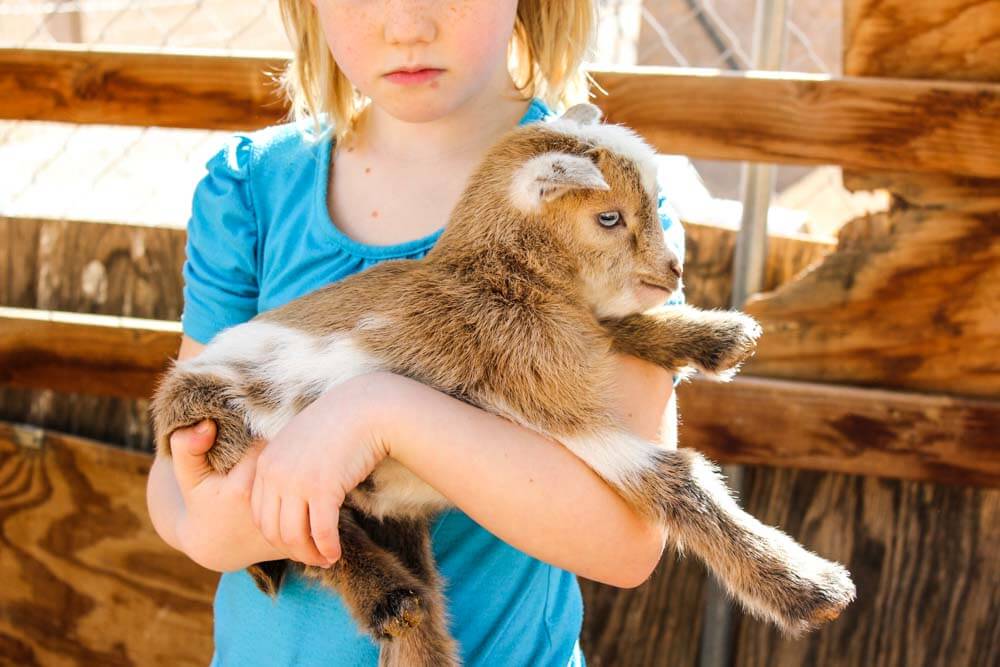
They are adorable fluffballs of everything that is good in the world.
And you want one!
Holding squishy, soft, sleepy baby goats is pure joy. And if you're hoping for the some goaty, cuddly goodness in the future, here's where you'll learn how to care for them so they stay nice and fluffy and jumpy for ya.'
No matter how many times baby goats are born here on our little farm, it never gets old!
But before you run to the nearest farm to snatch one up, there are a few things you need to know. Let's get started!
1. Baby goats are either mother-raised or bottle fed, and it's important to know which yours is.
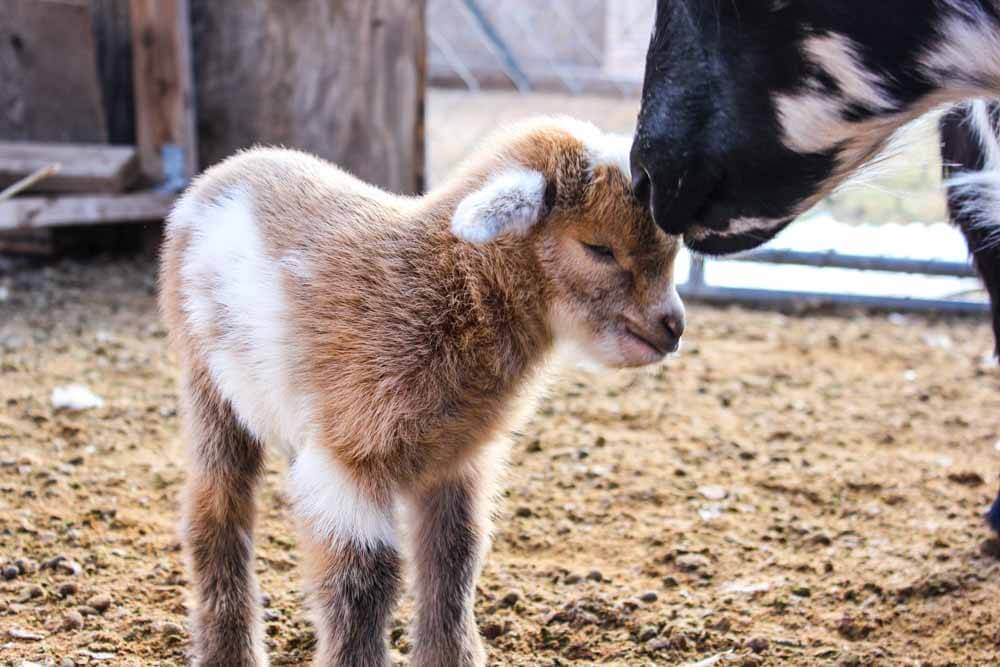
If a baby goat has been raised by its mother, then it will nurse from her until about 6-8 weeks of age. If it's been bottle-fed, then it will drink from a bottle until 6-8 weeks of age. It's important to know which your baby goat is, because that can determine a few different things in taking care of her early on.
Which is best, bottle-fed or mother-raised goat babies?
You'll find that bottle-fed babies are more attached to humans because they associate them with food. People can take babies away from their mother as soon as it's born and bottle feed it, but it's recommended that if at all possible, the baby should drink from the mother for AT LEAST a few days to obtain that early milk (called colostrum) which can provide a high source of nutrients and immunity for the newborn goat.
How to feed a bottle-fed baby
If your baby goat has never drank from a bottle before, it's going to need a few days of patience to learn how to do it. A baby goat might refuse the bottle even if it's time to feed.
The way we've been successful at getting a baby goat to drink from a bottle is to try MULTIPLE times a day (8-10 times) by holding the goat and having a helper hold the baby goat's mouth open while you squirt a little in its mouth for him to realize that all that yummy goodness is on the other side if he can just start suckling. It will take a few tries, but eventually you'll have a baby draining that bottle in minutes:)
*NOTE* If your baby goat is under 6 weeks and refuses a bottle for more than a day, I'd take her to the vet or call the farm where you bought her from. The biggest concern would be dehydration.
How to feed a mother-raised baby
If your baby goat has been raised from mom and is used to drinking milk directly from her, then you'll have to decide whether or not you're going to move her straight to adult goat hay and grain, or if you're going to try to bottle feed.
My advice is that if the goat is younger than 6 weeks, go ahead and try to bottle feed (along with offering some hay), but if your baby goat is older than that, then go straight to hay, and be sure to incorporate my practices below to encourage a happy tummy during the transition.
*NOTE* Baby goats who have been raised by their mother can be skittish if the mother is skittish around humans. It's a learned behavior from the mother or if they've been abused or chased around by humans. It's important to spend your first days with a lot of cuddling and feeding so they bond with you!
Supplies you'll need for bottle-feeding a baby goat
- Baby bottle
- Lamb/Kid nipple
- Goat milk replacement
- Colostrum replacement (If your baby didn't drink from mom for at least a few days)
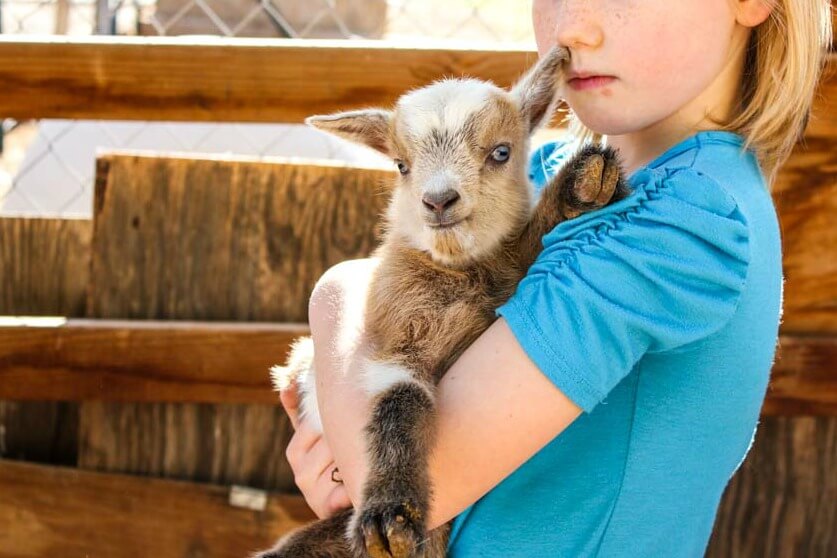
2. Baby goats need help in transitioning from milk to hay.
You'd think it would be easy and that baby goats can go straight from milk to hay, but in my experience, baby goats can develop bloating and digestive problems if the transition is made too fast or if they weren't properly introduced to it early on.
Most likely the baby has been around grass and hay, but it's probably only nibbled at it here and there. They love their mama's milk and their bellies are used to it.
What we like to do is be sure to provide probiotics (this is our favorite probiotic for goats) every day for 2 weeks during the transition, and then after that, we give it every week for a month. It really helps with bloating and encourages their rumen to get going with good bacteria production.
3. If you don't feed your baby goat correctly, it could get very sick or die.
The biggest mistake most new goat owners make is that they go to a local feed store and purchase "goat feed," thinking that is all the goat needs to survive.
I CAN'T STRESS ENOUGH THAT THIS IS VERY DANGEROUS!
Goats aren't like dogs. You can't just go to a feed store, purchase a bag of goat feed and think that will supply your goat with all it needs.
Goat feed is primarily grain, meant to be fed in VERY SMALL AMOUNTS, about a handful a day. Not as a 100% goat food source.
Goat primarily eat hay. There are a few types of hay, namely alfalfa hay, timothy hay, bermuda hay, or sometimes you'll find a mix of a couple of those in the bale. There are also hay pellets options.
Goats should eat the following:
- 80% hay, goats prefer straight alfalfa hay or a blend of alfalfa & bermuda or alfalfa & timothy (comes in bales, check your local feed stores)
- 15% pasture/weeds/grassy area or hay pellets (comes in 80 lb. bags, check your local feed stores)
- 5% grain (comes in 40 lb. bags, check your local feed stores or order here.)
- Goats also need minerals. You can either purchase loose minerals here and put a spoonful when you feed them grain, or you can purchase a mineral block here.
- Goats also need fresh, clean water, available to them at all times.
4. Goats are great at tolerating heat and cold.
Goats are great at tolerating the heat and cold, but if the weather in your area gets below 30 degrees, you need to be sure you're providing a shelter for them to go into to keep warm. A dogloo works well for little goats. If the temperature gets above 90 degrees, then you need to be sure you provide shade and cool water.
6. Goats like friends.
If you just bought one goat, now's the perfect time to turn right around go get another! But seriously, goats need other four-legged companions to be happy, and that doesn't include dogs or cats. Goats need to bond with a horse, cow, sheep, or another goat to feel that all's right with the world. And let's face it, any reason to get another goat is a GOOD ONE!
7. Make sure you have all the supplies you need.
Bottle feeding:
- Baby bottle
- Lamb/Kid nipple
- Goat milk replacement
- Colostrum replacement (If your baby didn't drink from mom for at least a few days)
Regular feed:
- 80% hay available all day (comes in bales, check your local feed stores)
- 15% pasture/weeds/grassy area or hay pellets (comes in 80 lb. bags, check your local feed stores)
- 5% grain (comes in 40 lb. bags, check your local feed stores or order here.)
- Goats also need minerals. You can either purchase loose minerals here and put a spoonful when you feed them grain, or you can purchase a mineral block here.
Extra Supplies:
- Goat collar
- Hoof shears (they need to be trimmed every month – Read here to learn how to trim goat hooves.
- Goat probiotics
- The Backyard Goat: An Introductory Guide to Keeping and Enjoying Pet Goats, from Feeding and Housing to Making Your Own Cheese.
- Goat brush
Ready to go get your first goat? Read my simple guide here on buying your first goat!
Baby Isn't Eating While Nursing, but Will Eat a Bottle
Source: https://www.weedemandreap.com/how-to-care-for-baby-goats/
0 Response to "Baby Isn't Eating While Nursing, but Will Eat a Bottle"
Postar um comentário